

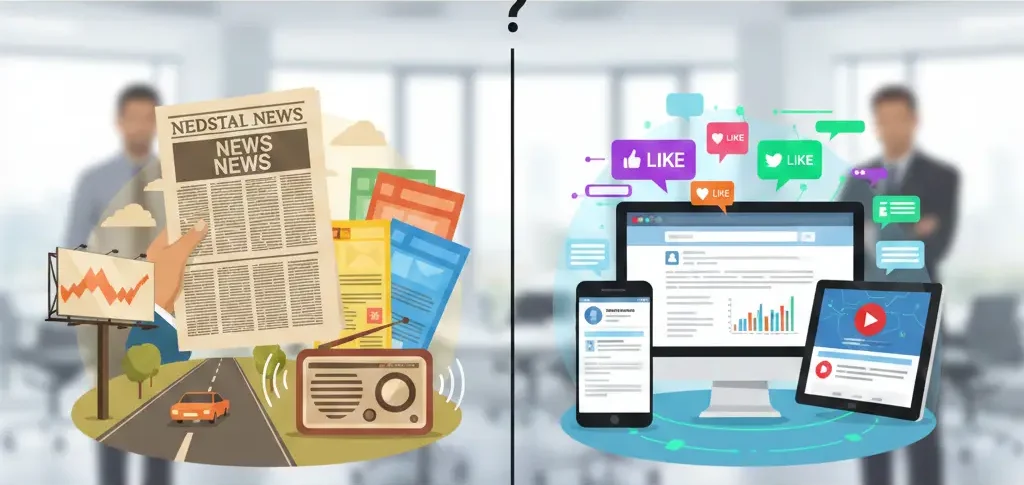
Traditional Marketing vs. Digital Marketing: Key Differences
The objectives of both marketing strategies, digital and traditional, are the same and include targeting the audience and selling the products and services. Digital marketing, on the other hand, is the method of promoting goods and services by using digital technologies and online platforms, while marketing in the traditional way relies on conventional means.
Table of Contents
ToggleWhat is Traditional Marketing?
Traditional marketing is an advertising method that reached potential customers through the use of non-digital and classic media channels according to the audience’s location. It relies mainly on out-of-home advertising (like billboards), radio, TV, direct mail, and telemarketing. This marketing strategy is a typical example of one-way communication where, without much or any direct interaction, the companies send out their messages to a large audience. Distributing ads in places where the target customers can most easily see, hear, or catch a glimpse of them, allows the brands to create a large base of people who are aware of their products or services through media that they already use.
Features of Traditional Marketing:
One-way Communication: It is the practice of one-sided communication where organizations do not normally let their audience participate or give their opinions; rather they communicate through one-way means.
Offline Channels: The strategy incorporates offline media like billboards, radio, TV, and periodicals.
Tangible Materials: The company also makes use of some physical materials to spread its message or promote a good or service. These physical materials can be in the form of posters, flyers, brochures, etc.
High Cost: Traditional marketing campaigns require a substantial investment because of the high costs associated with broadcasting, producing, and distributing physical goods.
What is Digital Marketing?
Digital marketing is a marketing technique that gets to the target market through the use of digital technology and internet channels. The company is employing such channels as email, mobile apps, social networking, the internet, search engines, and other digital ways to do this. This is a marketing strategy of two-way communication that allows the audience and the organization to talk, engage, and give feedback and/or suggestions. With the help of digital marketing’s various tools and techniques, the organization can assess the effectiveness of its campaigns, focus on specific audiences, and refine strategies.
Read Also: SEO vs Social Media Marketing: Which is Right for You
Features of Digital Marketing:
Two-way Communication: Digital marketing gives the opportunity for businesses to have a two-way communication with their customers, receive feedback and comments from them, and establish a proper connection.
Online Channels: It also relies on a variety of online channels like search engines, mobile applications, social media sites, email, and websites.
Multimedia Content: In order to capture the attention of the users on different web platforms, it employs the use of multimedia content like pictures, videos, infographics, etc.
Cost: Digital marketing is considered to be less costly compared to traditional marketing. This is because digital marketing usually offers more advertising avenues and has lower operational costs, which is the main reason for its price advantage over traditional marketing.
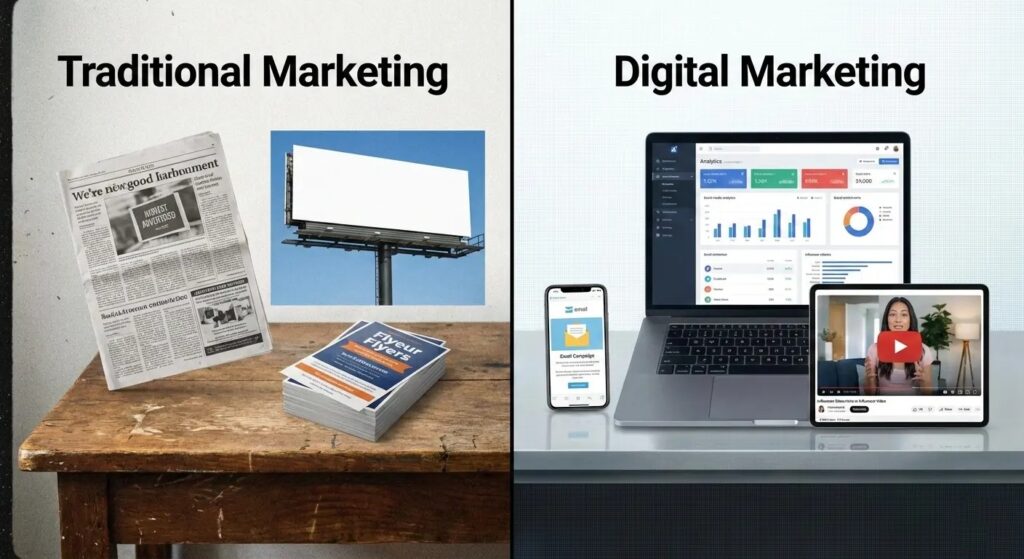
8 Key Differences Between Digital and Traditional Marketing
| Basis | Traditional Marketing | Digital Marketing |
|---|---|---|
| Meaning | Traditional marketing refers to promotional activities carried out through offline and conventional media. Campaigns usually require longer planning time and are difficult to modify once launched. | Digital marketing refers to marketing activities conducted using digital technologies and internet-based platforms, allowing campaigns to be launched and adjusted quickly. |
| Reach & Targeting | It reaches a broad audience using mass media such as newspapers, radio, and television, with limited targeting capabilities. | Digital marketing allows precise targeting based on demographics, interests, behavior, location, and online activity. |
| Cost | It is often expensive, especially in the case of television advertisements and print media. Costs are usually fixed and return on investment is difficult to measure accurately. | Digital marketing provides cost-effective options such as organic social media, email marketing, and pay-per-click ads, with better budget control and measurable ROI. |
| Interactivity & Engagement | Communication is one-way, offering little to no scope for customer interaction or feedback. | Digital marketing supports two-way communication through likes, shares, comments, reviews, and direct messages, leading to higher engagement. |
| Flexibility & Agility | Campaigns require long lead times and changes are difficult once the campaign is live. | Campaigns can be modified in real time based on performance, trends, and customer feedback. |
| Measurability & Analytics | Effectiveness is measured using estimates such as reach, recall, and brand awareness, which are not always precise. | Advanced analytics tools help track user behavior, conversions, campaign performance, and ROI accurately. |
| Tangibility & Brand Presence | Involves physical and tangible materials such as brochures, billboards, posters, and print ads that create a lasting visual presence. | Brand promotion is done digitally through websites, social media platforms, emails, and online advertisements. |
| Global vs. Local Impact | Highly effective for businesses targeting local or regional markets. | Enables global reach, making it suitable for businesses aiming to expand internationally and reach diverse audiences. |
In case you desire to make a rapid entry into the digital marketing world with top-notch knowledge or are aiming at heightening your professional status, a diploma would be a better option. We wish that you find this detailed knowledge about traditional marketing and digital Marketing useful. For more information on the digital marketing courses after the 12th, contact Digital Academy 360 team immediately.
Traditional Marketing and Digital Marketing: FAQs
Which is more cost-effective: traditional marketing or digital marketing?
If you wish to make a quick entry into the world of digital marketing with great knowledge or you are shooting for the stars in your career, a diploma would be a better option. We hope you will find this extensive information about traditional marketing and digital Marketing helpful. To know more about the digital marketing courses after 12th, get in touch with our AAFT team right away.
Can traditional and digital marketing be used together?
Certainly, the combination of the two approaches can result in superior outcomes. Brand equity is created through traditional marketing, while digital marketing reinforces engagement, targeting, and conversions over the internet.
Which marketing strategy provides better audience targeting?
Digital marketing makes it possible to do the targeting very precisely according to the demographic factors, interests, behavioral traits, and location. On the other hand, traditional marketing targeting is very limited and in the main, it depends on the geographical segmentation only.
Is traditional marketing more trustworthy than digital marketing?
Different people have different perceptions, and considered in the case of the older groups, the long time of the existence of traditional marketing made it to some extent more trustworthy. While on the other side, digital marketing has been gaining people’s trust through reviews, testimonies, and open communication.
2 Responses